


Embroidered vs Printed Caps: Choosing Your Finish
16 October 2026

There’s more to a personalised hat than the words on the front. The way a design meets the fabric changes how it looks, how it feels and the details you notice when you pick it up.
In this guide
The difference is in the surface
When you compare embroidered and printed caps, start with the simplest distinction. Embroidery builds the design from thread stitched into the fabric. Printing applies a design to the surface, using a process that depends on the maker and the material. “Printed” is a broad description, so two printed hats may use different methods and have different care needs.
On an embroidered cap, you can see the direction of the stitching and feel its texture. Lettering has a little depth, and the thread catches the light as the cap moves. With a printed cap, the character of the finish depends on the technique: it may feel very flat, slightly raised or somewhere in between.
Neither finish is automatically right for every design. A short name, a detailed photograph and a large colourful illustration ask different things of a small curved space. Begin with what you want to keep from your original idea, then choose a method that can express that clearly.
Namesake’s hats are an embroidery offering. This guide helps you understand that choice alongside printed alternatives; it isn’t a list of printing services available from the studio.
What embroidered custom caps do well
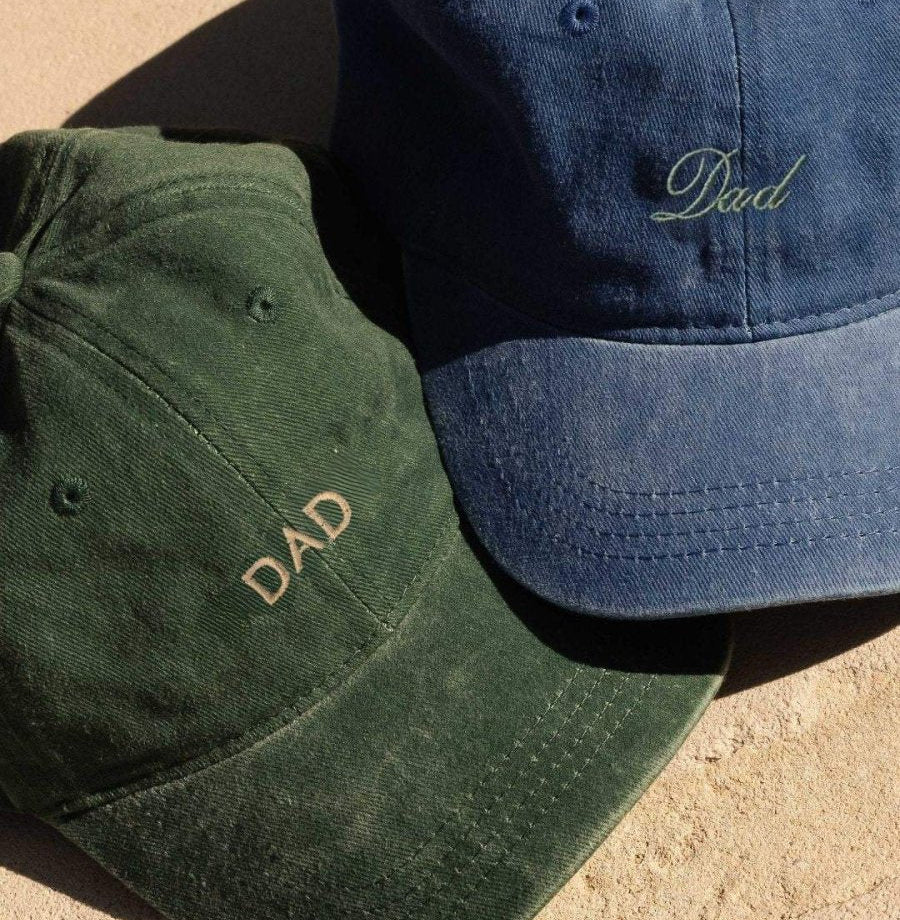
Embroidered custom caps suit people who enjoy a small detail with a tactile quality. Even a familiar word can feel different once it is made in thread. You notice a curve in a script letter, the rhythm of block capitals or the way a simple name sits against washed cotton.
That is why embroidery can be such a natural match for initials, nicknames, family titles and short sayings. The design does not have to explain everything. A few carefully chosen letters can carry a story without taking over the whole hat. There is room for a personal piece to be useful and understated at the same time.
Namesake’s Custom Text Hat pairs embroidered lettering with a relaxed cotton cap. Its current options let you consider front and back text, font and thread colour together. If you are drawn to a design with several text colours, look at the Multi-Colour Text Cap and check its specific options.
The appeal is the finished texture, not a promise that thread is indestructible. Fabric, design, stitching and care all play a part in how a hat wears over time. Treat embroidery as a considered finish you like living with, rather than a reason to skip the care instructions.
When a printed finish may suit the idea
A printed design may be worth exploring when the idea relies on a photographic effect, very small detail or a particular treatment of colour that a printer can reproduce. The result will depend on the printing method, the cap fabric and the area available. Ask the supplier to show examples made with a similar design, rather than assuming every method can reproduce every file.
For instance, a photograph contains subtle changes in tone. Translating that into stitches requires choices about what to simplify and what to keep. A printed version may aim for a different visual result. That does not make one more personal; it means you need to decide whether you love the original image itself or the idea of interpreting it in thread.
The same thinking applies to tiny wording. Shrinking a complicated design until it fits is not always a good solution, whichever method you choose. If the words become hard to read, a simpler layout may serve you better. Request guidance from the maker before committing to an important design.
Think about detail, lettering and colour
A cap is a small, shaped canvas. Before choosing embroidery, look for the details you would miss if they changed: perhaps a pet’s distinctive ears, a child’s uneven handwritten letters or the exact spelling of a nickname. Knowing what matters helps you ask useful questions about what is possible.
For text, compare a simple block style with a script using the product’s examples. Broad, open shapes and flowing joins create different moods. Don’t choose a font just because it looks beautiful in a full alphabet; think about how it treats the actual letters in your word. A short name with repeated rounded letters will feel different from a long name with tall capitals.
Colour is another part of legibility. Stronger contrast between the thread and the cap draws attention to the design, while a closer pairing is quieter. For a gift, the wearer’s usual colours are a useful starting point. You can be thoughtful without choosing an unusual combination simply because the cap is custom.
If the design begins as a pet photograph, read how to choose the best photo for an embroidered pet hat. For a child’s drawing, the artwork preparation guide deals with the details that a text-only cap does not need. These are different starting points, so give each its own preparation.
Ask the questions that affect the result
When you are comparing hat embroidery with printing, useful questions are quite practical. What design area is available? Which colours and fonts can you select? Does the maker accept your type of artwork? Can you see an example with similar lettering or detail? The answers tell you more than a general claim that one finish is “better”.
Check what an on-screen preview represents, too. A digital layout helps communicate an idea, but the final piece is made from fabric and thread or a particular printing process. Texture, scale and colour can read differently in person. Ask for clarification if a specific detail is essential to you.
For Namesake, use the live product options as your starting point and contact the studio about requests outside them. Read the current production and delivery FAQs if you are planning for an occasion. Allow for making time as well as the parcel’s journey, especially when ordering across countries.
Choose a finish you’ll enjoy caring for
A personalised cap earns its place through ordinary wear. Think about your routine as well as the design. Will you reach for it every morning? Do you like the feel of thread against cotton? Is a simple word enough, or does the idea depend on a larger image? Those answers help narrow the choice without turning it into a contest.
Care should follow the specific hat and its maker’s instructions. Namesake’s hat care advice recommends spot cleaning with a clean, damp cloth and gentle soap for more stubborn marks. Avoid fully submerging a structured hat, as the brim and shape can be affected. Let the cap air dry and reshape gently when needed.
Never pull a loose thread end. The care guide explains how to tidy it carefully, and you can ask the studio if you are uncertain. For a printed cap bought elsewhere, follow that maker’s directions rather than borrowing instructions for another finish. A little appropriate care is more useful than a sweeping promise about durability.
If stitched texture and a small, meaningful detail sound like your sort of thing, browse the custom text and image hats. Start with the idea you want to carry, then find the cap that makes room for it.
Frequently asked questions
What is the difference between embroidered and printed caps?
Embroidery makes the design from stitched thread, giving it texture and depth. Printing applies the design to the surface using a particular process. The look and care of a print depend on the method and materials.
Is embroidery always better than printing on hats?
No single finish suits every idea. Embroidery is appealing for tactile lettering and designs interpreted in thread. A printed option may suit a different kind of image. Compare examples and ask the maker about your particular artwork.
Does Namesake offer printed caps?
The Namesake hat options discussed here are embroidered. Check the current hat collection for available products, and contact the studio about requests beyond the listed options.
Can detailed photos be turned into embroidery?
Namesake offers a Custom Pet Portrait Hat, with separate guidance on choosing a suitable photograph. An embroidered interpretation is different from a photographic print, so follow the product advice and ask about essential details.
Can I machine wash an embroidered cap?
Follow the instructions for your particular hat. Namesake’s hat-specific guidance recommends spot cleaning and avoiding full submersion of structured hats. Do not assume a general garment washing instruction applies to a cap.
Find your favourite detail in thread
Explore embroidered hats


